
The Japanese Beetle’s Natural Enemies
Silent SpringThis flow follows the establishment of biological controls in the East and the contrast with chemical programs in the Midwest.
increasing Bearing strength in each event
 decreasing
Bearing strength in each eventdecreasingAn Imported Pest Establishes

A Beetle Takes Hold
Entry Through Nursery Stock
The Japanese beetle was identified in New Jersey after arriving on imported plants. It spread through eastern states with suitable temperature and rainfall.
A Search for Restraints
The beetle’s new range lacked many natural enemies from its native environment. Scientists looked abroad for predators and parasites that might restore some of those restraints.
Parasites Are Introduced

Natural Enemies Travel
A Cooperative Effort
Researchers imported dozens of predatory or parasitic species from the beetle’s native range. Several became established in the eastern United States.
A Specific Attack
Tiphia vernalis attacked beetle grubs in the soil, laying an egg on a paralyzed host. Its young then developed by consuming the grub, limiting the target population without spraying entire landscapes.
Milky Disease Spreads
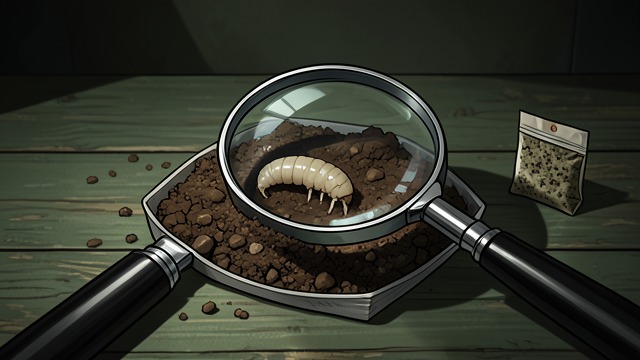
A Soil-Borne Pathogen
Disease Identified
Researchers found a bacterial disease that infected Japanese beetle grubs. The organism multiplied in the grub and caused the pale appearance that gave the disease its common name.
Distribution Across States
A prepared spore mixture was applied in multiple eastern states. The organism could remain viable in soil and spread through natural processes, making a one-time introduction potentially durable.
Populations Decline
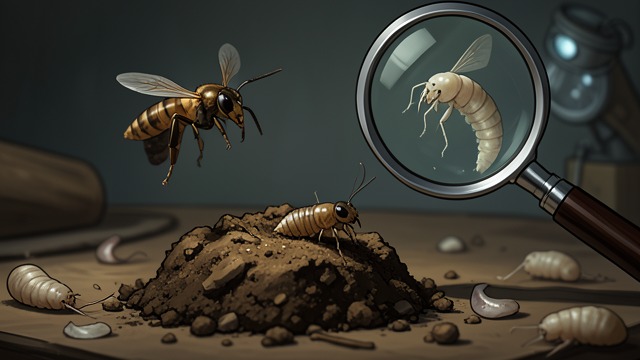
Control Takes Hold
Multiple Restraints
The combination of parasites and milky disease contributed to lower beetle populations across much of the East. The control did not depend on repeated blanket treatment.
A Long-Term Advantage
The established biological agents remained part of the environment and could continue acting over time. Their durability contrasted with chemicals that required frequent reapplication and risked non-target damage.
A Comparison Ignored
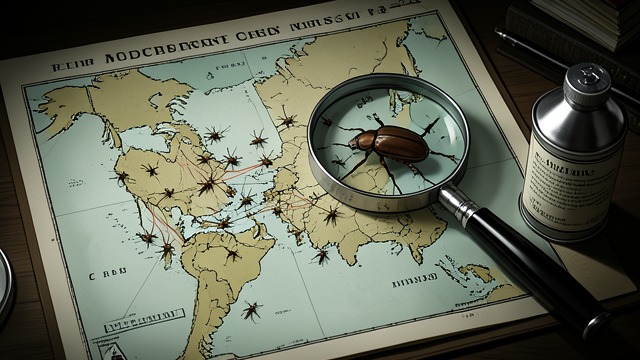
The Eastern Record Is Set Aside
New Eradication Claims
Midwestern agencies treated the beetle as an urgent threat and applied highly toxic chemicals on a large scale. Earlier eastern experience offered a less destructive model but did not prevent new chemical campaigns.
The Cost of Forgetting
Carson questions why biological measures were dismissed as too expensive without accounting for the cost of wildlife destruction. The comparison reveals how narrow economic calculations can shape policy.
After 1916
Between 1920 and 1933
From 1933 through the 1940s
By the mid-1940s
As Midwestern chemical programs expanded in the 1950s
